Plan Your Dream Chinese wedding in Malaysia
Planning a Chinese wedding in Malaysia requires blending traditional customs with a modern, minimalist style.
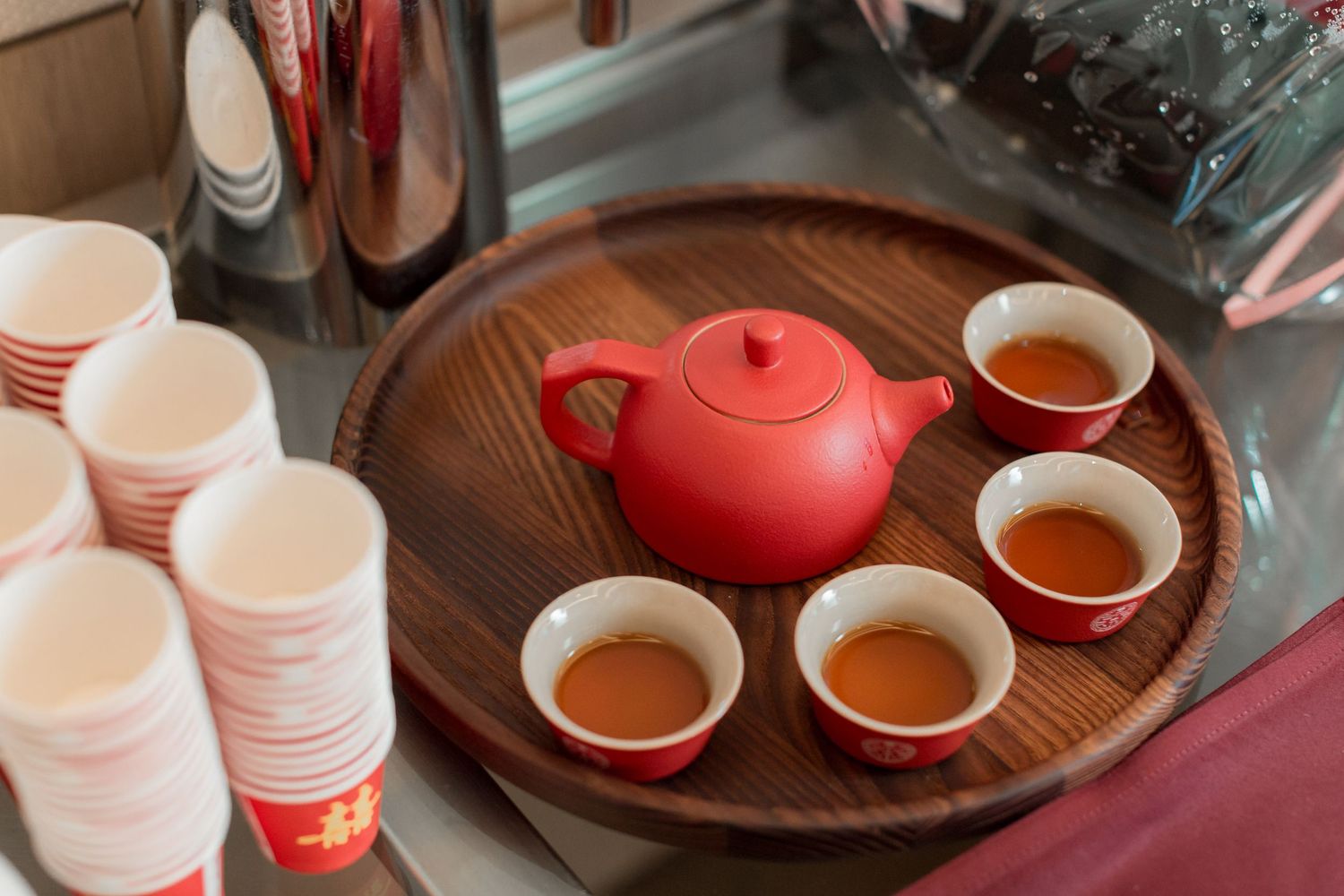
The core elements are a meticulously prepared tea ceremony (using red teaware and serving red date and lotus seed tea) and a lavish banquet (usually held in a hotel banquet hall). It is recommended to book a renowned wedding venue and a Chinese wedding photography supplier 12-18 months in advance. The budget should be planned at a mid-to-high level ( approximately RM 50.000.00 - RM 150.000.00, and can be combined with modern Chinese wedding attire (dragon and phoenix gown/Xiuhe dress) and a creative guestbook table to enhance the overall experience.
1 ) Guo Da Li (过大礼): Chinese Betrothal Ceremony & Gift Guide
Weddings are a beautiful blend of traditions that celebrate love, commitment, and the union of two families. Among these customs, Guo Da Li holds a special significance in Chinese culture. This ancient ritual symbolises the union between the bride and groom’s families through a ceremonial exchange of gifts.
What is Guo Da Li?
Guo Da Li (过大礼), the Chinese betrothal ceremony, holds deep significance in Chinese weddings. It involves the groom, accompanied by an elder female relative, formally proposing to the bride’s family by presenting a collection of carefully chosen gifts known as 聘礼 ( Pìnli ).
These gifts symbolise not just prosperity and good luck for the couple but also the groom’s sincere commitment to supporting the bride. They are a tangible demonstration of his ability to provide for her. By accepting these gifts, the bride’s family indicates their approval of the groom and their confidence in his suitability as a husband.
The betrothal gifts are presented to the bride’s family in a formal exchange, with auspicious phrases explaining each item’s symbolic meaning. Following the exchange, light refreshments are usually offered to the groom and his entourage.
Celebrate this timeless tradition with our authentic Chinese cultural wedding jewellery featuring heritage pieces for your special ceremony.
When Does Guo Da Li Take Place?
Guo Da Li generally takes place around two to four weeks before the wedding. Both families select an auspicious date based on factors like the couple’s Chinese zodiac signs and birth dates, often with guidance from a feng shui master.
Hui Li (回礼)
After Guo Da Li, the Hui Li (回礼) ceremony takes place. In modern times, these ceremonies are often combined. Hui Li involves the bride’s family returning a portion of the gifts to the groom’s family, signifying mutual respect and goodwill. This tradition, which once took place three days after the wedding, is now often performed on the wedding day before the banquet.
Groom’s Family Responsibilities
The groom’s family takes the lead in initiating Guo Da Li, selecting a suitable date and time in consultation with a Chinese almanac or a feng shui master.
The groom’s family then prepares the 聘礼 (pìnlǐ), ensuring the items are traditional and of high quality. The gifts are typically arranged on trays adorned with double happiness stickers, symbolising good fortune. On the day of the ceremony, the groom, accompanied by respected elders or a female relative, presents the gifts at the bride’s home.
Bride’s Family Responsibilities
The bride’s family receives the groom and his female elder relative, and ensures the bride is appropriately dressed, traditionally staying in her room during the initial exchange.
After receiving the gifts and the Pin Jin (bride price), the bride’s family reciprocates with Hui Li, symbolising acceptance of the proposal. They also distribute Xi Bing ( wedding pastries ) to relatives and friends, formally announcing the upcoming marriage.
Guo Da Li Procedure
The Guo Da Li ceremony is carried out in a structured sequence, formalising the engagement:
Selecting an Auspicious Date: The groom’s family chooses an auspicious date 2-4 weeks before the wedding, guided by astrological compatibility.
Preparing Betrothal Gifts: Gifts are gathered and arranged traditionally, often decorated with double happiness symbols.
Delivering the Gifts: On the chosen date, the groom and his entourage present the gifts to the bride’s family.
Receiving Gifts and Hui Li: The bride’s family reciprocates with a portion of the gifts, symbolising mutual respect.
Si Dian Jin Presentation: The groom’s mother presents Si Dian Jin (四点金), a four-piece gold jewellery set, as a promise to care for the bride.
Sharing Xi Bing: The groom’s family shares Xi Bing with relatives and friends, announcing the marriage.
Displaying Gifts: The bride’s family displays the Si Dian Jin and other gifts as a sign of appreciation.
Acceptable Gifts for Guo Da Li
The gifts presented during Guo Da Li may vary based on ancestral traditions. Common items include:
Oranges
Pig trotters
Two bottles of wine or hard liquor for the bride’s father
Wedding pastries, such as Dragon and Phoenix cakes
Si Dian Jin (四点金): A four-piece gold jewellery set, symbolising a secure and prosperous union.
Conclusion
The Guo Da Li ceremony is an important Chinese pre-wedding custom that represents the groom’s commitment and the union of the two families. It involves the exchange of meaningful gifts and the observance of traditional etiquette, symbolising respect and good fortune for the couple.
If you wish to honour this beautiful tradition, explore Wah Chan’s collection of gold jewellery, including the timeless Si Dian Jin, perfect for adding a touch of heritage and elegance to your special day.
Auspicious Date Selection( 选吉日)
Auspicious date selection refers to the process of identifying a “lucky day” based on traditional beliefs, calendars, and sometimes personal birth information. The goal is to align the event with favorable cosmic or symbolic influences.
is an important tradition in many Chinese and Asian cultures when planning major life events such as weddings, house moving, business openings, or signing important contracts. The practice involves choosing a date that is believed to bring good luck, harmony, and prosperity.
Traditional .
Traditionally, families would consult a Feng Shui Master to calculate a date based on the couple’s unique 8 Characters (八字), which come from their exact birth dates and times.
The master will:
Avoid dates that clash with either of your Chinese zodiac signs
Take into account family preferences for certain lunar months
Skip sensitive periods like Ghost Month or Qing Ming.
Pin Jin (Betrothal Gift Money)
Pin Jin (聘金) is the monetary gift from the groom’s family to the bride’s family, usually presented during Guo Da Li. It’s a gesture of sincerity, respect, and gratitude to the bride’s parents for raising her and a blessing for the couple’s future.
Purpose and Symbolism
Sincerity & Support: Shows the groom’s commitment to caring for his future wife
Respect: A gesture of honour to the bride’s parents for her upbringing.
Good Fortune: Given in auspicious amounts ending in “8” (prosperity) or “9” (longevity).
typical AMOUNT in
- There is no fixed “correct” amount; it varies and is usually decided based on closeness, tradition, and comfort.
- Common ranges are RM 10.000 to RM 30.000
How it works
Pin Jin is prepared by the groom, placed in a large red packet, and presented to the bride’s parents during Guo Da Li.
The bride’s family typically keeps a portion and returns the rest (回礼) to symbolise goodwill and the belief that wealth should circulate between the families, often one-third to half of the original sum.
Modern approaches:
Agree on a nominal amount and redirect the rest towards the couple’s housing or honeymoon
Combine Pin Jin with other symbolic gifts, such as jewellery or property contributions.
Tips for a smooth process:
- Start early: Discuss 3–6 months before Guo Da Li
- Involve both families: Open conversations help avoid misunderstandings
- Focus on symbolism: If the budget is tight, remember the gesture matters most
- Keep it private: Settle amounts and expectations behind closed doors to preserve harmony.
Planner’s Tip:
If expectations differ, agree on a symbolic “public” amount for the ceremony, and handle the rest privately. This keeps the moment harmonious for everyone.
4 ) Hair Combing Ceremony
The Hair Combing Ceremony (梳头仪式), also called Shang Tou (上头), is a beautiful pre-wedding ritual symbolising the couple’s transition from singlehood to married life. Held the night before the wedding, it’s a moment filled with blessings, tradition, and family warmth.
PURPOSE AND SYMBOLISM
Coming of Age: Marks the couple’s maturity, their transition into adulthood, and readiness for marriage
Blessings for the Future: Each comb stroke is accompanied by auspicious phrases wishing the couple a long, harmonious life together.
New Beginnings: Performed the night before the wedding to welcome a fresh chapter in life.
When it’s done
- Traditionally, on the eve of the wedding, at an auspicious time chosen from the Tong Shu or by a Feng Shui master.
- The groom usually starts first, followed by the bride, in their respective family homes (they can’t see each other before the wedding).
Symbolic Items Needed
- Pomelo leaf
- A pair of dragon phoenix candles or an oil lamp (symbolising light and guidance).
- Wooden comb (new, for purity).
- Basin of water with red dates, lotus seeds, and pomelo leaves (symbolising fertility).
- Red strings or hair ribbons for tying hair after the ceremony.
- Round mirror (for completeness).
How it works
- Before the ceremony, bathe in red dates, lotus seeds and pomelo leaf-infused water, then change into new sleepwear and slippers.
- Sit in front of a lit pair of dragon phoenix candles in their own homes (this is believed to ward off evil spirits) or an oil lamp.
- An elder of good fortune combs the hair four times, reciting blessings for lifelong love, harmony, fertility, and longevity. Usually, then recite 4 phrases that are said with each stroke:
- 一梳梳到尾 (Yi Shu Shu Dao Wei): May your marriage last a lifetime.
- 二梳百年好合 (Er Shu Bai Nian Hao He): May you be blessed with a happy and harmonious marriage until old age.
- 三梳子孙满堂 (San Shu Zi Sun Man Tang): May you be blessed with an abundance of children and grandchildren.
- 四梳白发齐眉 (Si Shu Bai Fa Qi Mei): May you be blessed with longevity
- Hair is tied with a red ribbon.
- The bride or groom looks into a mirror for a bright, complete future.
Modern Adaptations
- Some couples perform the ritual together in their own home for convenience.
- LED candles or lamps may be used instead of open flames in condos or hotels.
Setup Essentials
Tea Set: Often a traditional red porcelain with the “Double Happiness” (囍) symbol.
- Stools: For kneeling or sitting, depending on family custom.
- Red Packets: Given by elders to the couple and given by couple to the younger or unmarried relatives as a gesture of blessing.
- Snacks: Sweet treats like red dates & lotus seeds for a blissful marriage.
Tea Selection
- Sweetened tea with red dates and longans is most common in Singapore.
- Symbolises sweetness and fertility in married life.
Modern Adaptations
- Couples may stand or bow instead of kneeling, while still showing sincerity and respect.
- Some add a fun twist for friends (e.g., favourite drinks instead of tea), but always note that elders should still be served traditionally.
COMMON MISTAKES TO AVOID
Serving in the wrong order (can be seen as disrespectful)
Not briefing the Daikam (Wedding Chaperone) or bridal party to cue the order smoothly
Running out of tea before the ceremony ends
An Chuang ( Matriemorial bed Setting )
An Chuang (安床) is the setting of the matrimonial bed that is a cherished pre-wedding ritual symbolising a harmonious marriage, fertility, and the couple’s readiness to build a family. Completing this tradition is believed to invite stability, blessings, and good fortune into the new home.
PURPOSE OF SYMBOLIC
- Stability: “An” means peace, reflecting a stable and harmonious marriage.
- Fertility: Symbolic items placed on the bed carry wishes for children and prosperity.
- Blessings: The process invites good fortune for the couple’s life together.
WHEN It's DONE
Traditionally, 3–7 days before the wedding on an auspicious date.
If timing is tight, it can be done on the same day as Guo Da Li, though they’re traditionally kept separate.
WHO SHOULD PERFORM IT
A person of “good fortune” that we typically refer to as a married woman with healthy children is chosen to perform the bed setting.
Teochew & Hokkien Wedding Traditions: Preferably the groom’s parents or grandparents.
Cantonese & Hakka Wedding Traditions: A Hǎo mìng pó (好命婆) who blissfully married with many children and grandchildren.
Notes: The couple should avoid being in the room during the ceremony.
SYMBOLIC ITEMS NEED
- New red or gold bedsheets (avoid pink as it is traditionally linked to remarriage)
- A pair of red bedside lamps (symbolising brightness & harmony in the marriage)
- Red packets with money placed under pillows
- Dried fruits & seeds like red dates, lotus seeds, longans (symbolising fertility)
- Two mandarin oranges placed on the bed (prosperity)
HOW IT WORKS
- Thoroughly clean the bedroom before the ceremony date
- Set the bed with new bedsheets and pillows
- Place symbolic items on and under the bed
- Switch on bedside lamps and keep them lit for at least 24 hours
MODERN ADAPTATIONS
- Couples living in smaller homes may adapt the ceremony to symbolically include the bed in a multi-use room.
- LED lamps may replace traditional bulb lamps for safety and convenience.
COMMON MISTAKES TO AVOID
- Forgetting to prepare all items in advance can delay the ceremony.
- Choosing someone who doesn’t meet the “good fortune” criteria can cause disapproval from elders.
- Using second-hand or old bedding instead of new.
Wedding Day Morning Ceremony -Review
The morning of a traditional Chinese wedding in Singapore follows a meaningful sequence blending age-old customs with modern touches. While every couple adapts it to their own style, the heart of the day remains the same, honouring family, receiving blessings, and beginning married life with joy.
TYPICAL WEDDING DAY MORNING FLOW
Bride & Groom preperation
Bride gets hair and makeup done, changes into qún kuà (裙褂), groom into mǎ kuà (马褂).
Behind-the-scenes photos and videos with family and bridal party.
Ensure all wedding essentials such as bridal bouquet, rings, ang paos, tea sets, etc are packed and ready.
ARRIVAL OF DAIKAM ( WEDDING CHAPERONE ) & WEDDING PLANNER / COODIRNATOR ( IF ANY )
Oversee morning preparations and ensure all ceremonial items are in place.
FETCHING THE BRIDE
Groom and groomsmen arrive at the bride’s home at the chosen auspicious time.
Daikam (Wedding Chaperone) may assist with the veil ceremony for the bride with the bride’s parents.
After the veil ceremony, a young boy (bride’s younger brother or male cousin) opens the car door for the groom, symbolising welcome.
Groom presents a bouquet and symbolic gifts to the bride’s parents before entering.
GATES CRASH GAMES ( OPTIONAL )
Bridesmaids set light-hearted challenges before groom can “win” the bride. This adds fun to the morning but is not part of the strict tradition.
Planner’s Tip: Keep to 15–20 minutes to avoid schedule delays.
TEA CEREMONY AT BRIDE'S HOME
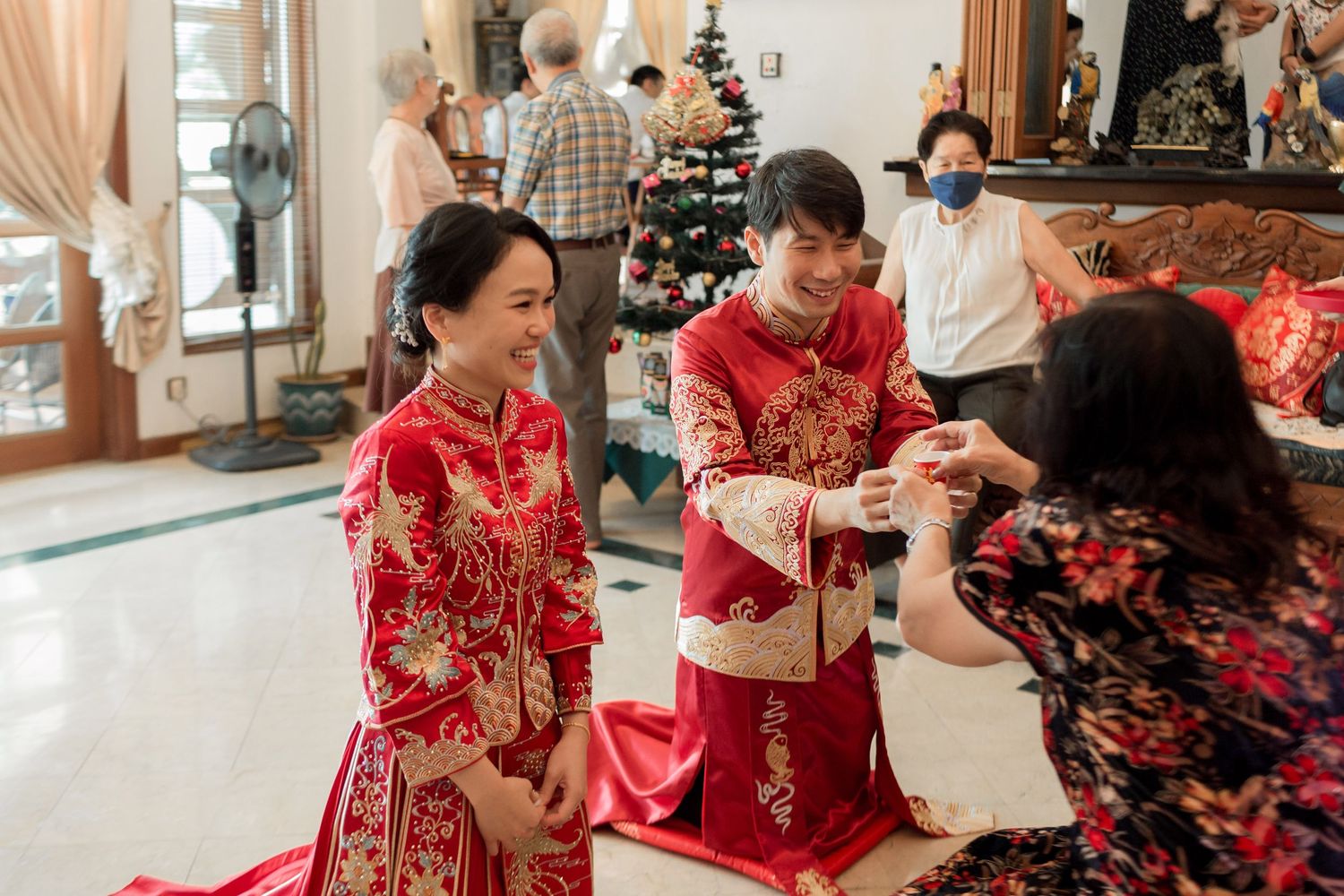
Couple serves tea to bride’s parents, grandparents, and elders.
Receive blessings and red packets in return.
Couple is then served tea by younger or unmarried relatives, and in return, they present ang pao as a gesture of blessing.
Props: tea set, Red dates and lotus seeds tea, stools, red packets, serving order list.
Family portraits or group photos to be taken after tea ceremony.
LEAVING THE BRIDE's HOME
Before departing, the bride’s family serves the couple Mee Sua with hard-boiled eggs for longevity blessings.
Bride walks to bridal car under a red umbrella for protection and good fortune together with the groom
Once in the car, bride throws a red foldable fan out of the window to symbolise leaving behind past troubles, bad habits, and negativity, stepping into a new chapter.
Family member retrieves the fan, keeping her past within the family and sending her forward with blessings.
- Travel to Groom’s Home
- Couple and bridal party head to groom’s home for the second tea ceremony.
- Planner’s Tip: Allow buffer for travel and photos.
- Tea Ceremony at Groom’s Home
- Couple serves tea to groom’s parents and family elders.
- Officially welcomes the bride into the groom’s family.
- Couple is then served tea by younger or unmarried relatives, and in return, they present ang pao as a gesture of blessing.
- Props: tea set, Red dates and lotus seeds tea, stools, red packets, serving order list.
- Bed Jumping
- A young boy (whose zodiac does not clash with the couple) jumps or rolls on the bed to bless them with children.
- Lunch or Light Reception
- The couples will then either be served a “sweet soup” which usually contains longans, red dates, lotus seed, hard-boiled egg and/or glutinous rice ball (汤圆 Tāng yuán) – ingredients cooked together to symbolize a blissful marriage.
- Groom’s family usually can prepare a small meal or light reception for close relatives and the wedding party before the afternoon rest.
- Returning to the Bride’s Home (3 days after the wedding)
- Traditionally held three days after the wedding as a formal visit to the bride’s parents.
- Couple serves tea to the bride’s parents, symbolising continued filial piety and strengthening family ties after marriage.
- Bride changes into a different outfit (e.g., Gua or a simpler dress) to signify a new phase and that three days have passed since the wedding.
Timing Considerations
- Auspicious arrival times are often based on the Tong Shu or the feng shui master’s advice.
- Build at least 15 minutes of buffer time between each major activity to allow for photography and unexpected delays.
Modern Adaptations
- Couples who skip the gatecrash can replace it with a private “first look” photo moment.
- Some combine both families’ tea ceremonies into a single location to save time, especially if homes are far apart.
PLANNER's TIPS
Assign a “ceremony manager” (bridesmaid/groomsman) to cue elders during tea ceremonies and ensure smooth ang pao handovers.
https://www.aspirerstudio.com/blog/kevin-lai-teng-wedding-day/ - Kevin & Lai Teng Wedding Day
6 ) The Tea Ceremony is one of the most meaningful
and symbolic moments in a Chinese wedding. It marks the couple’s formal introduction to each other’s families and the acceptance of the marriage by both sides. Beyond tradition, it’s a heartfelt exchange of respect, blessings, and unity.
Purpose and Symbolism
Respect: Serving tea is a gesture of gratitude and honour to parents and elders.
Acceptance: Receiving blessings and red packets represents the couple’s official welcome into the family.
Harmony: The serving order follows the family hierarchy, preserving tradition and reinforcing familY bonds.
Wedding Banquet – Overview
The wedding banquet is the grand finale of a Chinese wedding, which is a joyous celebration where family, friends, and colleagues gather to honour the couple’s union. In Singapore, it blends time-honoured Chinese traditions with modern hospitality, creating a night that’s both meaningful and memorable.
PURPOSE AND SYMBoLIC
- Celebration: A festive gathering to share joy, laughter, and blessings.
- Gratitude: A way for the couple’s families to thank guests for their presence and gifts.
- Symbolism in Food: Each course carries auspicious meanings such as prosperity, harmony, and fertility.
SEATING ARRANGEMENT ETIQUETTE
- VIP Table: Usually for the couple, parents, and closest immediate family members.
- Relatives: Placed nearer to the VIP table according to seniority.
- Friends and Colleagues: Usually seated further from the stage, but still with a good view for speeches and performances.
Planner’s Tip:
Assign ushers from both families who can recognise guests and seat them correctly to avoid confusion or awkward moments.
TYPICAL BANqueT IN KUALA LUMPUR
- Couple First Look & Pre-Banquet Portraits: Couple to have a private “first look” moment and takes photos in the ballroom before guests arrive.
- Cocktail Reception (30–45 mins): Guests mingle, enjoy canapés, sign the guestbook, and take photos.
- Ballroom Doors Open: Emcee welcomes guests; childhood or pre-wedding photo montage plays.
- First March-In & Welcome Speech: Couple enters to applause; short speech by the couple or emcee.
- Dinner Service Begins (8–10 Courses): Often accompanied by live music or entertainment; courses served in auspicious order.
- Second March-In, Cake Cutting and Champagne Toast: Bride changes outfit; couple re-enters for cake cutting and champagne toast.
- Yum Seng Ceremony: Couple, parents, and grandparents toast on stage with guests.
- Express Morning Highlights Video: Recap of the day’s earlier moments.
- Table-to-Table Toasts: Couple personally thanks guests at each table.
- Final Toast & Group Photos: Signals the close of the evening.
- Wedding After Party (Optional): For couples who want to keep the night going, this can be a relaxed gathering in a private lounge, hotel suite, or nearby bar. Music, drinks, and late-night snacks keep the celebrations alive into the early hours.
Common Symbolic Dishes
- Fish (鱼) – Abundance and surplus.
- Roast Suckling Pig – Purity and completeness (especially in Cantonese traditions).
- Glutinous Rice Balls – Family unity.
- Lotus Seed Dessert – Fertility and harmonious marriage.
MODERN ADAPTATIONS
- Couple may opt for live bands, video montages, or choreographed dances to personalise the program.
- Some choose buffet receptions or outdoor receptions, or themed banquets for a less formal feel.
- Dietary considerations: Vegetarian, vegan, or halal menus for inclusivity.
PLANNER TIP's
Always confirm the banquet’s end time with the venue and keep to the schedule; hotel overtime fees can add up quickly.
Attire , Jewellery Symbolism- overview
In a Chinese wedding, what you wear isn’t just about looking beautiful (though that’s a given!). It’s about honouring tradition, carrying blessings, and marking each part of your wedding day with meaning. From the Guo Da Li to the tea ceremony and the banquet, your attire and jewellery tell a story that’s rich with culture and love.
Bride's Traditional Attire
- Qun Kua (裙褂)
- The classic choice for the tea ceremony is a two-piece jacket and skirt, usually in rich red and gold, embroidered with dragons and phoenixes.
- Every stitch is symbolic: harmony, prosperity, and a strong, lasting marriage.
- Commonly worn during the tea ceremony.
- Cheongsam / Qipao
- A timeless, figure-hugging dress that works beautifully for a banquet march-in or reception.
- Modern brides often update it with lace, beadwork, or softer colours.
- Western Gown
- The showstopper for your first banquet march-in.
- Perfect for adding a touch of fairy-tale elegance to the day. A popular choice for its modern elegance.
GROOM TRADITIONAL ATTIRE
- Tang Jacket / Changshan
- A traditional Chinese suit that’s smart and cultural, often worn for the tea ceremony or banquet entrance.
- Western Suit or Tuxedo
- A classic for the banquet, darker shades like black, navy, or charcoal keep things sleek and formal.
JEWELLERY TRADITIONAL
- Si Dian Jin (四点金) – Teochew Weddings
- A four-piece gold set (necklace, bracelet, ring, earrings) gifted by the groom’s mother.
- Symbolises protection, blessings, and a promise of security in marriage.
- Gold Bangles / Bracelets – Hokkien & Cantonese Weddings
- Usually presented during the tea ceremony, often in intricate designs passed down through generations.
- Hair Accessories
- Gold or pearl pins, sometimes shaped like a phoenix, to complement your hairstyle for the tea ceremony or banquet.
MODERN TOUCHES COUPLE TO LOVING
- Brides choosing softer tones like champagne or pastel Qun Kua for a lighter, romantic feel.
- Minimalist gold or mixed-metal jewellery for comfort and a more versatile look.
- Grooms can swap black suits for tailored navy or grey for a fresher, modern vibe.
PLANNER tiP's
Start fittings early, especially if you’re having your Qun Kua custom-embroidered (these can take months). Bring along your jewellery to fittings so you can see the full look together and make sure everything feels balanced and comfortable.